For some, sports are something optional, trivial, or something you are forced to do. For me, sports are everything. Every time I chose a university, I always made sure that it had sports teams, especially volleyball or rugby. When I decided to come to Science Tokyo, I didn’t realize how its unique characteristics would influence practicing sports.
Joining a university sports club at Science Tokyo (Ookayama campus)
Having attended universities in the UK, USA, and Australia, I was used to a strong sports community, which also helped to bring the students closer together (regardless of whether they practiced any sports or not). Sports and social clubs helped to bring the entire student body together, creating a sense of community.
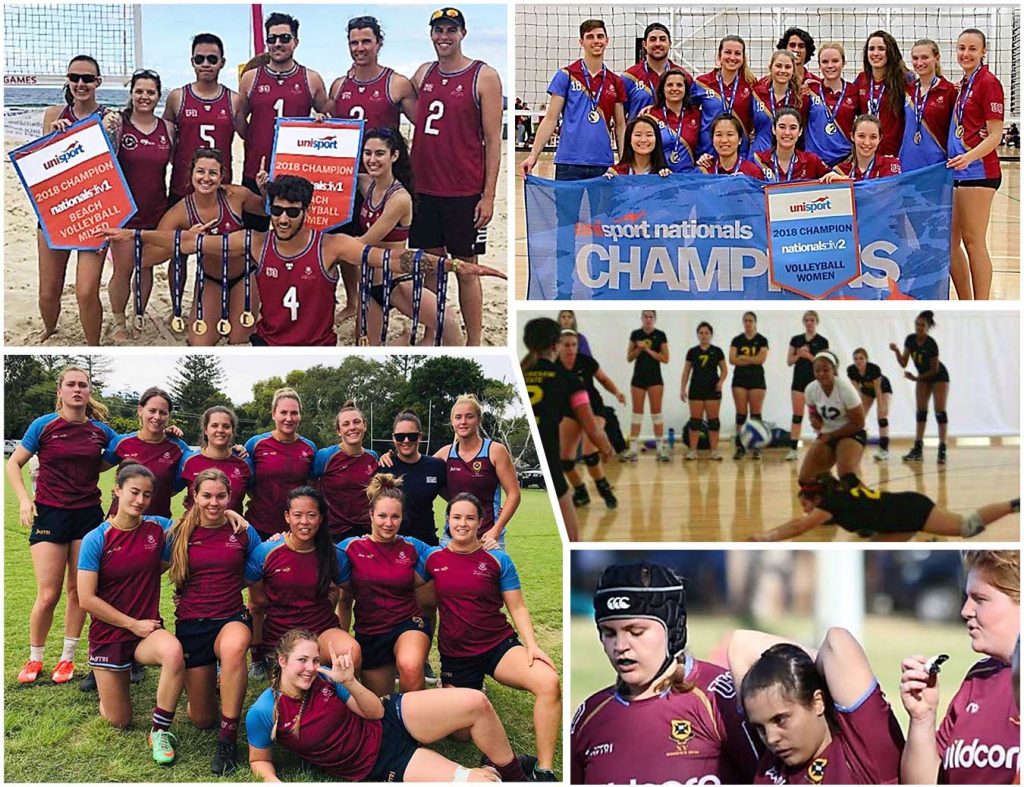
For those international students thinking about joining a club at Science Tokyo, let me tell you that it’s a great way for English speakers to practice Japanese, for Japanese speakers to practice English, and especially to do cultural exchange and get to know new and interesting people. At the same time, I must tell you that you might encounter certain limitations, especially sports clubs. As most of the sports clubs participate in inter-college competitions, undergraduate students are welcomed, whereas some do not accept graduate students.
Historically, at Science Tokyo science and engineering fields, the ratio of female students has remained around 12% among undergraduates, and around 16% of the entire science and engineering fields, which inevitably results in more choices for male students and fewer opportunities for female students, particularly when it comes to choosing a club for a team sport (individual sports clubs always welcome female students).
The question remains as to what needs to be done at the sports level to make sure that the increasingly diverse population of students can find a welcoming environment. These spaces are essential for students to connect, collaborate, and develop a sense of community beyond academics. Some things that other universities do could be to make announcements about sporting events, hold competitions, or create a university-wide athletic day. At Science Tokyo, while sports are present, the focus appears to be more on academic pursuits, which is understandable given the strong emphasis on engineering and science disciplines. One of the main sports-related events at the Ookayama Campus takes place early in the academic year, typically between mid-April and mid-May, when sports and social clubs introduce their activities and recruit new members.
With its strong engineering focus, Science Tokyo historically had fewer female students enroll, though this has been changing in recent years as the university strives to foster greater diversity and inclusion. The data for 2025 shows significant progress, with female enrollment in the undergraduate engineering and science fields reaching an average of 22% across all degrees.
Given this positive trend, it may be worth exploring how sports and other extracurricular activities could further support this shift and help new students build networks and thrive within the Science Tokyo community.
My sports story at Science Tokyo (Ookayama Campus)
I did not expect to find a women’s rugby club at the Institute, and I was right. But I did expect to find a women’s volleyball club, as this is one of the major sports in Japan. On the website, I saw that there was only a men’s club. I wrote to them about it, and they also confirmed this. I asked if we could form a women’s volleyball club and what the process entails (back in April 2023). I was told that the process would be too time consuming, and not much worth it because of the low female student population at the time.
This was one of the biggest culture shocks. Usually, sports are a way to build community; to show that with dedication and consistency, all things are possible. But what I felt was disappointment, defeat, and inferiority.
The Karate Club
After a lot of searching, I found a women’s rugby club that I could train with outside the Institute. That is when I also found the Institute’s Karate Club. I did not have high hopes when I asked if I could join a training session. I was a graduate student and a female, facts that did not help me previously. What happened, you might wonder? I found my club!
I had never practiced karate before, yet all the sensei were excited to have international students and to teach starting from the basics. I was thought of as a person, independent of gender, and I was pushed to keep on doing better. Even though there were not many students, the sensei always showed up at the training sessions and was extremely patient with us newbies. They pushed us to persevere, and yet I managed to surprise them when I said, after a few months of practice: “I want to participate in the kata competition.” Kata is a series of movements that shows the skills of the athlete and demonstrates how each movement should be performed with perfection. It takes athletes years of practice to master. But this is what I wanted to do. Even if met with doubts, I kept training and the sensei kept teaching me, and it was one of the best experiences of my campus life.
It took almost 2 years, recovering from a knee injury, and practicing with one of the most experienced sensei who only speaks in Japanese before I was able to participate in the kata category, and I placed 3rd in a tie.
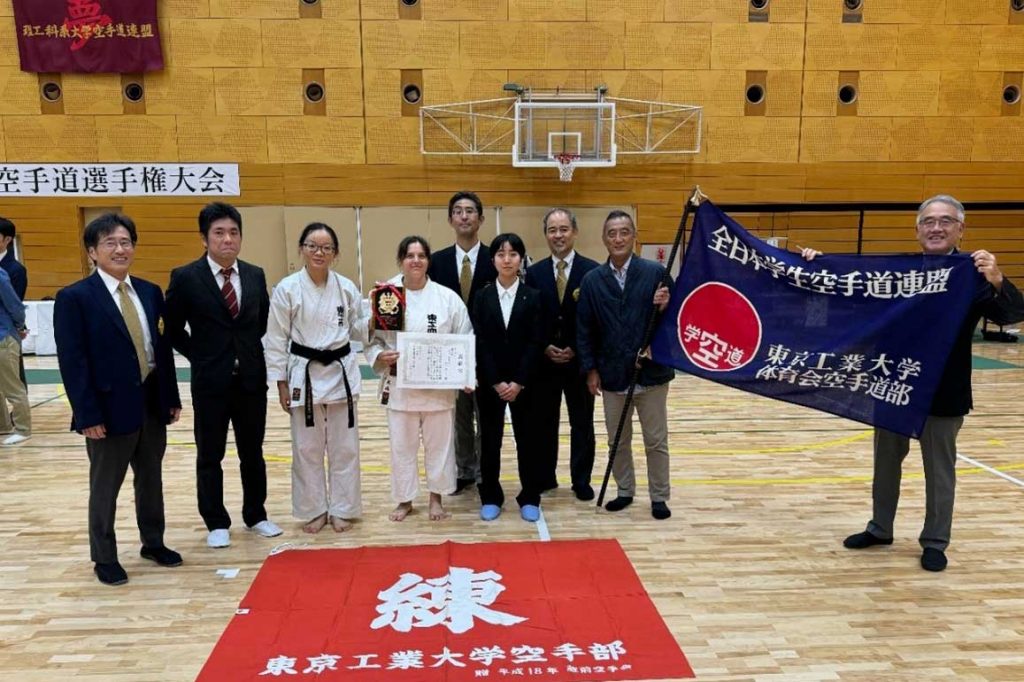
Karate helped me to be more focused on the moment, to understand my body, and be conscious of each movement I make. Also, the style I am practicing is quite fascinating. Karate has 4 main styles, and our dojo practices Wado-ryu, which is really fitting for a science school. In fact, this style is all about physics and making movement as efficient as possible. Do not waste your energy to swing your arm around, instead use it as a vector to maximize energy and power. Your elbow is the focal point, and wherever you stop it, the hand follows the trajectory. The force comes from your back leg, always anchored to the ground as the main source of energy. Unconsciously, we control our entire body by leveraging the rules of physics, and that’s just cool.
I hope this blog has helped you understand the role of sports in one’s growth — both physically and mentally. What it takes to trust your coaches and teammates to help you achieve your goals. How sport can unite cultures, even when there is a small language barrier.
If you are coming to Science Tokyo, make sure to join a club.
As for Science Tokyo and the student community, I hope we all continue to work together, making efforts to create a welcoming community, where EVERYONE can practice sports as they like. Whether a student is male, female, local, international, or a person with or without a disability, we need to just see each student as a person and ensure that equal opportunities are provided.
To break stereotypes and stay on the right path to achieve equality, we need to interact with each other with equal and fair eyes.
I am an international student, but also form part of the student body. I want to play my part in achieving this goal through collaboration with the student community.
In science, collaboration is everything, because we cannot be experts in everything. With a team composed of different nationalities, cultures, and academic backgrounds, I am sure that we can bring new perspectives and new ways of seeing and understanding.
Diversity is the key to our future, and joining a sports team is one simple way we can start to open that door.